release:
Business contract management software: Benefits and use cases

Business contract management software helps companies organize, track, and streamline every stage of their contracts, from creation and negotiation to execution and renewal. Modern systems automate routine tasks, reduce errors, and provide AI-powered insights that keep teams informed about key dates, obligations, and renewals. With integration options for tools like Salesforce and multiple ways to capture signatures—including hand-drawn, typed, and in-person signing—business contract management software makes it easier for sales, HR, legal, and finance teams to manage agreements efficiently and accurately.
See why businesses are rushing to SignTime’s feature-packed contract repository system.
What is business contract management software?
Business contract management software is a tool designed to help organizations manage the entire lifecycle of their contracts. It covers everything from drafting and negotiation to execution, storage, and eventual renewal. Modern systems often include AI capabilities that automatically extract important details, track obligations, and send reminders to relevant stakeholders.
Companies use contract management software to centralize agreements in a single, secure location. This reduces the risk of lost or misplaced contracts and makes it easier for teams to access the information they need. By automating repetitive tasks, the software helps teams save time, minimize errors, and improve overall efficiency.
Integration with other business systems, such as CRM or ERP platforms, is a key advantage of contract management software. It ensures that contract data flows seamlessly between departments and that teams can act on insights without switching tools. Features like e-signatures, version tracking, and analytics dashboards further enhance usability and transparency.
Why do businesses use contract management software?
Businesses use contract management software to improve efficiency and reduce the workload associated with handling contracts manually. Automating routine tasks such as approvals, reminders, and document storage frees employees to focus on higher-value work. This also speeds up contract cycles and ensures that agreements move through the organization quickly and accurately.
Contract management software helps reduce risk by ensuring compliance with internal policies, industry regulations, and legal requirements. It tracks obligations, highlights missing or inconsistent information, and prevents missed deadlines or renewals. These capabilities help companies avoid costly penalties and maintain stronger relationships with clients, vendors, and employees.
Organizations also gain strategic insights by using contract management software. AI-powered analytics can identify trends, monitor performance, and provide actionable data for decision-making. By centralizing contract information, businesses can understand their agreements better, optimize processes, and respond proactively to changes or upcoming opportunities.
What are the different types of contract management software?
Contract management software comes in several forms to meet different business needs. On-premise solutions are installed locally and offer control over data and infrastructure, while cloud-based systems provide accessibility, automatic updates, and easier integration with other tools. Each type has advantages depending on company size, security requirements, and IT resources.
Some contract management software is designed for specific industries or departments. For example, HR-focused tools may streamline employee agreements, while sales-oriented systems emphasize faster deal approvals and e-signature workflows. Specialized solutions often include templates, compliance checks, and reporting tailored to the department’s needs.
Modern contract management systems also vary by functionality. Many include multiple signature options such as typed, hand-drawn, and in-person signing. AI-powered features automatically extract key data, set reminders for important dates, and highlight potential risks. This flexibility ensures that organizations can choose a solution that matches both their technical requirements and workflow preferences.
What are the benefits of using contract management software in your business?
Contract management software provides businesses with a wide range of benefits that improve efficiency, reduce risk, and enhance decision-making. By automating routine tasks and centralizing agreements, organizations can save time, minimize errors, and ensure that contracts are properly managed throughout their lifecycle.
One of the main advantages is better compliance and risk management. The software tracks obligations, deadlines, and contract terms automatically, preventing missed renewals or lapses that could lead to financial or legal consequences. AI-powered alerts and analytics help teams stay proactive and make informed decisions.
Contract management software also improves collaboration across departments and provides strategic insights. It allows teams to share, review, and approve contracts efficiently, while analytics dashboards provide data on trends, performance, and obligations. For example, AI can identify renewal opportunities or flag discrepancies in contracts, helping businesses act quickly and strategically.
Here are some specific benefits SignTime’s customers mention:
- Shorter sales cycle: Contracts move through the approval process faster, enabling deals to close more quickly.
- Reduced churn: Automatic reminders prevent missed renewals with clients or vendors.
- AI nudges: Alerts and recommendations ensure important dates and obligations are not overlooked.
- Improved compliance: Standardized templates and automated checks reduce legal risks.
- Centralized repository: All contracts are stored in one secure, searchable location.
- Easy auditing: Reports can be generated quickly for internal or regulatory reviews.
- Streamlined approvals: Multiple stakeholders can review and approve contracts digitally.
- Enhanced collaboration: Teams can edit, comment, and track changes in real time.
- Contract version tracking: Every revision is recorded, preventing confusion or disputes.
- Digital signatures: Reduces paperwork and speeds up contract execution.
- Template reuse: Standard contracts can be generated quickly without rewriting.
- Cost savings: Less reliance on paper, storage, and administrative effort.
- Faster onboarding: Employee and vendor contracts are processed efficiently.
- Reduced errors: AI identifies missing fields or inconsistencies automatically.
- Data-driven insights: Dashboards track contract performance, timelines, and obligations.
What should companies look for in a contract management software system?
When selecting contract management software, businesses should focus on core functionality first. The system should automate routine tasks, provide secure storage, and offer AI-powered tools to extract key contract data, set reminders, and flag potential risks.
Integration capabilities are also essential. The software should connect seamlessly with existing tools like CRM, ERP, or email systems to ensure smooth workflows and centralized access to contract information. This allows departments to work efficiently without constantly switching between applications.
User experience and scalability are important for long-term adoption. The platform should be intuitive, mobile-friendly, and capable of supporting growing teams and increasing contract volumes. Strong reporting and analytics tools, combined with accessible support and training, help ensure that the software delivers consistent value across the organization.
Here are some of the must have features in quality contract management software:
- Automation features: Automatically extract key contract information and send timely reminders.
- Security: Protect contracts with encryption, access controls, and audit logs.
- Flexibility: Support multiple signature types, including hand-drawn, typed, and in-person signing.
- Reporting and analytics: Generate insights from contract data to improve decision-making.
- Customer support and training: Provide guidance to ensure smooth implementation and ongoing use.
How do different departments use contract management software?
Contract management software delivers value across multiple departments, not just legal teams. Each department can leverage the system in ways that match their workflows, helping the organization operate more efficiently and reduce risk.
Sales teams use contract management software to automate contract creation and approvals. This speeds up deal cycles, ensures agreements are accurate, and prevents missed deadlines that could affect revenue. AI reminders help sales teams track renewals and follow up on opportunities proactively.
Legal departments rely on the software to maintain compliance, monitor obligations, and flag potential risks. Centralized storage and version tracking make audits straightforward and reduce the likelihood of disputes. Automated workflows ensure contracts are reviewed properly before execution.
Marketing teams benefit from contract management software when managing partnerships, sponsorships, or influencer agreements. They can track approval stages, deadlines, and obligations to ensure campaigns launch on time. Analytics tools provide insight into contractual commitments and performance metrics.
HR uses contract management software to manage employee agreements, onboarding, and renewals. Automated reminders ensure no contract lapses occur, and central storage allows easy access for audits or reporting. The software also helps HR standardize templates for compliance.
Finance teams monitor payment terms, approve vendor contracts, and reduce late payments with contract management software. Automatic alerts for upcoming obligations and renewals improve cash flow management. Integration with ERP systems ensures accounting teams have accurate, up-to-date contract data.
Procurement teams standardize vendor contracts, track obligations, and speed up approvals using contract management software. This ensures that procurement processes stay consistent and compliant. AI tools can highlight upcoming renewals or potential risks in supplier agreements.
Operations teams use contract management software to oversee service agreements and manage workflows. Automated notifications help teams stay on top of deadlines and obligations. This ensures consistent execution of contracts across the organization.
IT teams maintain integrations and ensure the security of contract data. They oversee access controls, audit logs, and encryption to protect sensitive information. The software also helps IT support other departments in adopting and using the platform efficiently.
SignTime is the best contract management software
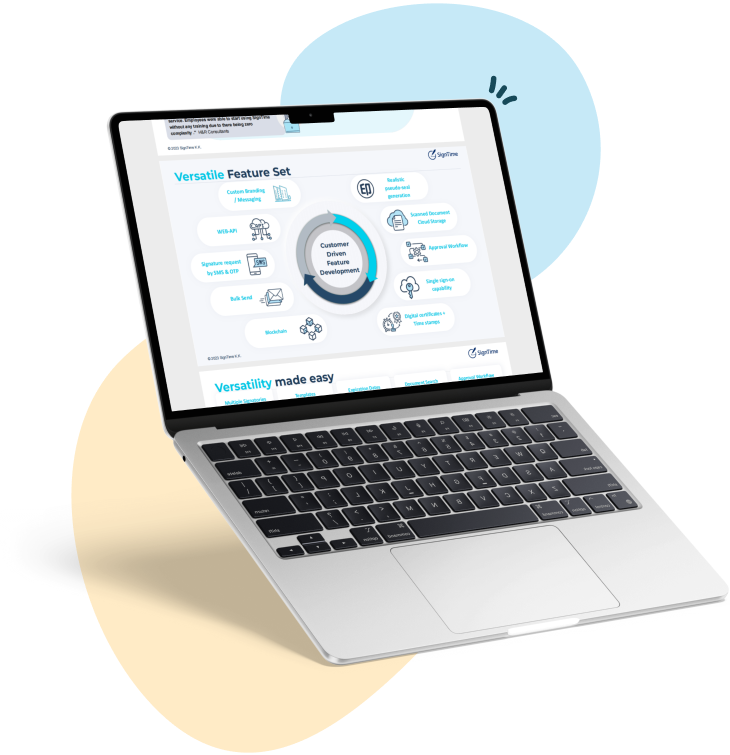
SignTime provides a modern, flexible solution for managing business contracts across all departments. With multiple signature options—including hand-drawn, typed, hanko, and in-person signing—teams can capture agreements in the way that works best for them. AI-powered features automatically extract key contract details, set reminders for important dates, and flag upcoming renewals, helping organizations stay on top of obligations without manual tracking.
The platform integrates seamlessly with tools like Salesforce, making it easy for sales, HR, legal, finance, and marketing teams to work from a single source of truth. Departments can automate workflows, track contract performance, and generate actionable insights that support better decision-making. SignTime balances powerful features with ease of use, providing a cost-effective solution for businesses that want a reliable, centralized contract management system.
By centralizing contracts, streamlining approvals, and providing AI-driven insights, SignTime reduces risk and saves time for every team in the organization. Its combination of flexibility, security, and automation makes it a practical choice for companies looking to improve efficiency, maintain compliance, and maximize the value of their contracts.
Download our brochure to see whether SignTime might be a fit for your organization.