release:
What is a verified electronic signature?

A verified electronic signature (VES) is a way to sign documents online while adding proof about who signed, when they signed, and whether the document was changed afterward. Unlike basic e-signatures, a verified electronic signature focuses on trust, traceability, and record integrity, which makes it useful for contracts, approvals, and agreements that need stronger assurance. As more business moves online, understanding how verified electronic signatures work helps teams choose tools that balance speed, security, and practicality.
See why businesses are rushing to SignTime’s feature-packed contract repository system.
What is an electronic signature?
An electronic signature is any digital mark or action that shows a person agrees to a document. It can be as simple as typing a name, clicking a button, or drawing a signature on a screen. The goal is to replace paper signing with a faster and more trackable process.
Common types of electronic signatures
Electronic signatures come in several forms, and the best choice depends on the situation and risk level.
Here are some typically used types of e-signatures:
- A typed name that indicates the signer’s intent to approve a document.
- A hand-drawn signature created using a mouse, stylus, or touchscreen.
- A scanned image of a handwritten signature placed into a digital document.
- A click-to-sign method that records consent and confirms the signer saw the document.
- A system-generated signature tied to a verified user account and login credentials.
What makes an electronic signature “verified”?
A verified electronic signature is an electronic signature that includes additional proof of identity and document integrity. It is designed to show that the signer is who they claim to be and that the document has not been changed after signing. Verification does not mean a signature is automatically legally valid, but it does raise confidence and reduce risk.
Key elements of a verified electronic signature
Verification typically combines several technical and procedural controls to build trust.
Here are the key elements of a VES:
- Identity verification methods link the signer to the signature through credentials or authentication.
- Tamper-evident technology shows whether the document has been altered after signing.
- Time-stamping records the exact moment the signature was applied.
- Audit trails capture signer actions and system events during the signing process.
- Authentication controls require signers to confirm their identity before they sign.
How verified electronic signatures are checked and validated
Verification is a process that looks for evidence and signals rather than a visual check. It focuses on proving the signer’s identity, confirming the document has not changed, and capturing the signing history. Validation is often done through a verification system or a platform that stores signing records.
Verification systems generally check a set of core factors to confirm authenticity and integrity:
- The integrity of the document since the time of signing.
- The identity signals associated with each signer.
- The timestamp and signing sequence.
- The audit log and event history.
- The cryptographic or system-based validation results.
What are the regulations on verified electronic signatures?
Verified electronic signatures are treated differently depending on the country and the type of agreement. Most laws focus on whether the signature proves intent, identity, and document integrity. The rules also consider how sensitive the document is and what level of verification is needed for the situation.
Common regulatory principles across regions
Even though laws vary, most regulations share similar expectations about how electronic signatures should work.
Here are some typical VES regulatory requirements:
- Electronic signatures must show the signer intended to sign the document.
- The signing process must allow attribution to a specific signer.
- The record must be retained in a way that prevents tampering.
- Parties must be able to reproduce the signed document for future reference.
- Stronger verification is often required for higher-risk agreements.
Are verified electronic signatures equivalent to “wet” signatures?
Verified electronic signatures are often treated as legally acceptable, but they are not always a direct replacement for wet signatures. Acceptance depends on the type of document, the industry, and the rules in a given country. In many cases, verified electronic signatures provide enough evidence and assurance for business use, but certain situations still require paper signing or additional verification.
When verified electronic signatures are commonly accepted
Verified electronic signatures are commonly used in a wide range of business and administrative situations where speed and traceability matter.
Here are some example VES use cases:
- Commercial contracts between consenting parties are often signed electronically because they are easy to track and store.
- Employment and HR documentation frequently uses verified electronic signatures for faster onboarding and record keeping.
- Vendor and procurement agreements use verified electronic signatures to speed up purchasing and approval workflows.
- Sales agreements and order forms use verified electronic signatures to reduce delays and prevent lost paperwork.
- Internal approvals and authorizations often rely on verified electronic signatures to maintain audit trails and accountability.
Use SignTime for all of your verified electronic signature needs
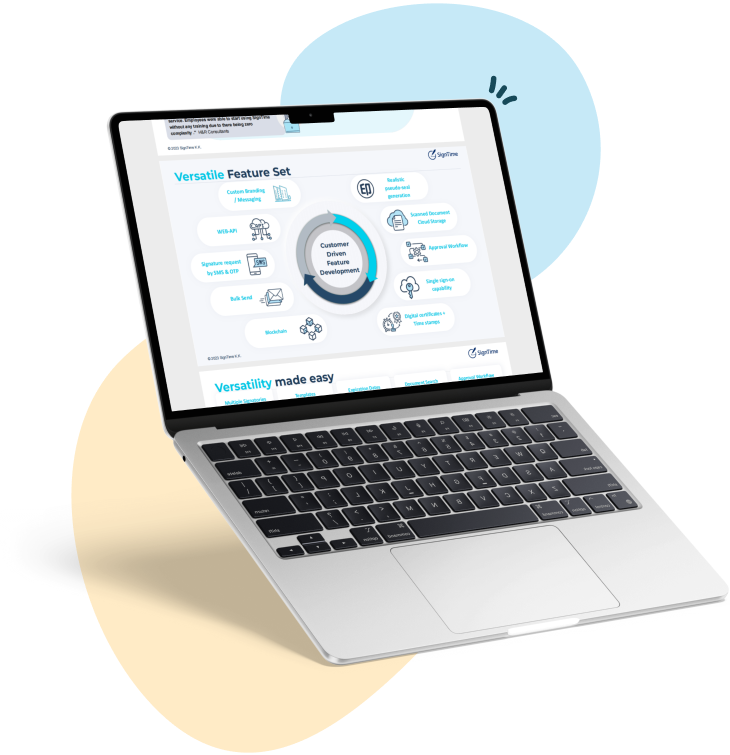
SignTime provides a range of signing options that support verified electronic signature workflows without forcing teams into a single method. Users can choose hand-drawn, typed, or hanko-style signatures depending on what fits the document and the audience. The platform also supports in-person signing, which helps industries that still require physical presence or on-site verification.
SignTime includes built-in AI tools that help extract key contract data, such as counterparties, amounts, and dates. The system can also set reminders and flag auto-renewals, which reduces the risk of missed deadlines. These features support verification by improving visibility and making it easier to manage signed documents over time.
SignTime’s contract repository keeps documents organized and accessible, while audit trails track signing activity and system events. This helps teams validate what happened, when it happened, and who was involved. For organizations that want a reliable, flexible signing solution that supports verified workflows, SignTime can provide a practical and scalable option without overcomplicating the process.
Download our brochure to see whether SignTime might be a fit for your organization.