release:
EchoSign vs DocuSign: Which is better?

Choosing the right e-signature platform can make a major difference in how efficiently your contracts move from draft to signed agreement. EchoSign (Adobe Sign) integrates closely with Adobe tools and is popular for document-heavy workflows, while DocuSign is widely recognized for enterprise-scale features and global compliance.
SignTime offers a flexible alternative with hanko, hand-written, and typed signatures, approval workflows, Salesforce integration, and a secure contract repository, making it a strong choice for organizations that need simplicity, efficiency, and features tailored for both global and Japanese markets.
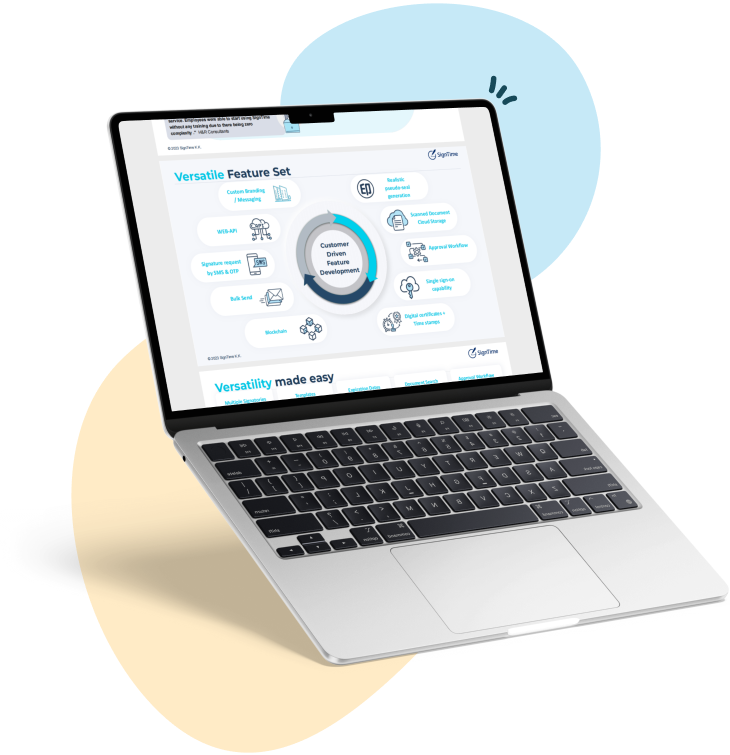
See why businesses are rushing to SignTime’s feature-packed contract repository system.
What is an e-signature?
An e-signature is a legally recognized digital method for indicating agreement to the contents of a document. It eliminates the need to print, sign by hand, and scan or mail paperwork, making contract completion faster and more efficient.
Different platforms offer various signing options to meet diverse business needs.
- SignTime allows hanko, hand-written, and typed signatures, providing flexibility for global and Japanese workflows.
- EchoSign supports typed, drawn, and uploaded signatures, with strong integration into Adobe Document Cloud.
- DocuSign provides typed, drawn, and uploaded signatures along with detailed verification and audit tracking for compliance.
E-signatures also improve collaboration across locations and time zones. Organizations can securely review and sign contracts remotely, reducing administrative overhead and accelerating agreement processes.
What is an online contract repository?
An online contract repository is a centralized, secure system for storing and managing contracts. It allows organizations to keep all agreements in one searchable location instead of scattered folders or email threads, improving organization and reducing the risk of lost documents.
These repositories often include version control, access permissions, and search functionality.
- Users can track document changes over time and control who can view or edit files.
- Automated reminders for renewals and approvals help teams stay on schedule and avoid missed deadlines.
- Centralized storage supports compliance and auditability by keeping a clear record of contracts and their history.
A contract repository also enhances collaboration. Teams can work together efficiently, maintain visibility into document status, and ensure that all contracts follow proper review and approval processes.
What are the benefits of a digital signature and contract management platform?
A digital signature and contract management platform combines electronic signing with tools to organize, track, and store contracts. This reduces the time and effort required to prepare, send, and finalize agreements.
These platforms also improve security and compliance:
- Encryption protects sensitive information from unauthorized access.
- Audit trails provide detailed records of who signed and when, supporting legal and regulatory requirements.
- Access controls and approval workflows ensure documents are reviewed and approved by the right people.
Centralized storage and workflow automation make contract administration more efficient:
- Teams can quickly locate agreements and track their status.
- Automated reminders help prevent missed deadlines or renewals.
- Collaboration across teams and locations is simplified, improving accountability and visibility.
Overall, a digital signature and contract management platform increases speed, accuracy, and organization, helping teams manage contracts more effectively while maintaining compliance.
What are some popular e-signature platforms?
Many organizations use dedicated e-signature platforms to streamline their contract workflows. These tools help teams create, send, sign, and track agreements electronically, saving time and reducing errors. Each platform has different strengths, integrations, and pricing models, making the choice dependent on business needs and workflow complexity.
- SignTime
- EchoSign (Adobe Sign)
- DocuSign
SignTime
SignTime is a flexible e-signature and contract management platform designed for both global businesses and companies operating in Japan. It supports hanko, hand-written, and typed signatures, giving teams multiple signing options to match legal or cultural requirements.
- SignTime integrates with Salesforce and other CRMs, helping teams maintain seamless workflows.
- SMS notifications and approval workflows reduce delays and improve accountability.
- Its secure contract repository and built-in templates help centralize agreements and make document creation faster.
- Multi-language support and audit trails ensure compliance and usability for international teams.
EchoSign (Adobe Sign)
EchoSign, now Adobe Sign, focuses on integration with Adobe Creative Cloud and Document Cloud tools. It supports typed, drawn, and uploaded signatures and is popular among teams that already use Adobe for document creation and management.
- The platform includes templates, automated reminders, and workflow support to accelerate signing processes.
- It is designed for enterprise environments, providing security, audit tracking, and compliance features.
- Teams can monitor document progress and maintain visibility into approvals.
- While strong for enterprise workflows, it is less tailored for Japanese market-specific requirements.
DocuSign
DocuSign is a widely recognized e-signature solution used globally by organizations of all sizes. It supports multiple document types, automated approvals, and extensive integrations.
- DocuSign provides detailed audit trails and compliance certifications, helping organizations meet regulatory requirements.
- Workflow automation reduces delays and standardizes approvals across departments.
- Mobile access and cloud storage allow teams to manage contracts from anywhere.
EchoSign vs DocuSign vs SignTime
EchoSign, DocuSign, and SignTime all provide secure, legally recognized e‑signature solutions with features designed to help teams manage agreements electronically. Each platform targets a different set of priorities. EchoSign focuses on document integration and productivity within the Adobe ecosystem. DocuSign serves enterprise users who need extensive workflows and compliance support. SignTime aims to balance usability and advanced contract management, with flexible signing options and features tailored for both global and Japanese market workflows.
Choosing the right platform depends on your organization’s needs, existing tools, and contractual processes. Some teams prioritize simple, fast signing, while others require more advanced approval workflows, integration depth, and centralized contract organization. The table below highlights key features of each platform to help you decide which one fits your workflow best.
Here is a summary table for the features found in EchoSign, Docusign and SignTime.
| Feature | SignTime | EchoSign | DocuSign |
| Signature types | Hanko, hand-written, typed | Typed, drawn, uploaded | Typed, drawn, uploaded |
| Salesforce integration | Yes | Limited | Yes |
| CRM integrations | Salesforce + others | Limited | Multiple |
| SMS notifications | Yes | No | No |
| Approval workflows | Yes | Limited | Limited |
| Contract repository | Full featured | Advanced | Advanced |
| Document templating | Built-in | Built-in | Built-in |
| Supported document types | Many | Many | Many |
| Contract vault security | High | Medium | Medium |
| Audit trails | Detailed | Detailed | Detailed |
| Free tier | Yes | No | No |
| API access | Yes | Yes | Yes |
| Mobile support | Yes | Yes | Yes |
| Bulk send capability | Yes | Limited | Yes |
| Custom branding | Yes | Yes | Yes |
| Contract renewal reminders | Yes | Limited | Yes |
| Compliance certifications | Japanese & global | Global | Global |
| Support for multi-language | Yes | Yes | Yes |
| Pricing structure | Flexible | Simple | Complex |
| Workflow automation | Yes | Limited | Limited |
| Analytics and reporting | Basic | Advanced | Advanced |
| Cloud storage options | Multiple | Adobe cloud | Multiple |
SignTime is the best contract management platform
SignTime combines flexible signing options with advanced contract management features, making it a strong choice for organizations of all sizes. Its support for hanko, hand-written, and typed signatures allows teams to adapt to both global and Japanese business workflows. Salesforce integration and SMS notifications help keep contracts moving quickly, reducing delays and improving accountability.
The platform’s approval workflows, secure contract repository, and built-in templates streamline the entire contract lifecycle. Teams can track document status, maintain visibility, and avoid missed deadlines, all within a centralized system. Multi-language support ensures global teams can collaborate efficiently, while audit trails maintain compliance and security.
SignTime is designed for businesses that need both ease of use and powerful features. It works well for small teams that want simplicity and efficiency, and it scales for larger enterprises that require advanced workflows. With SignTime, organizations can centralize contracts, reduce administrative overhead, and support both global operations and Japan-specific signing needs.
Whether your team is small or enterprise-scale, SignTime offers a reliable, cost-effective platform for managing contracts. Try SignTime today to experience a flexible, modern approach to e-signatures and contract management.
Download our brochure to see whether SignTime might be a fit for your organization.