release:
A how to guide to contract analytics (including what metrics to track)
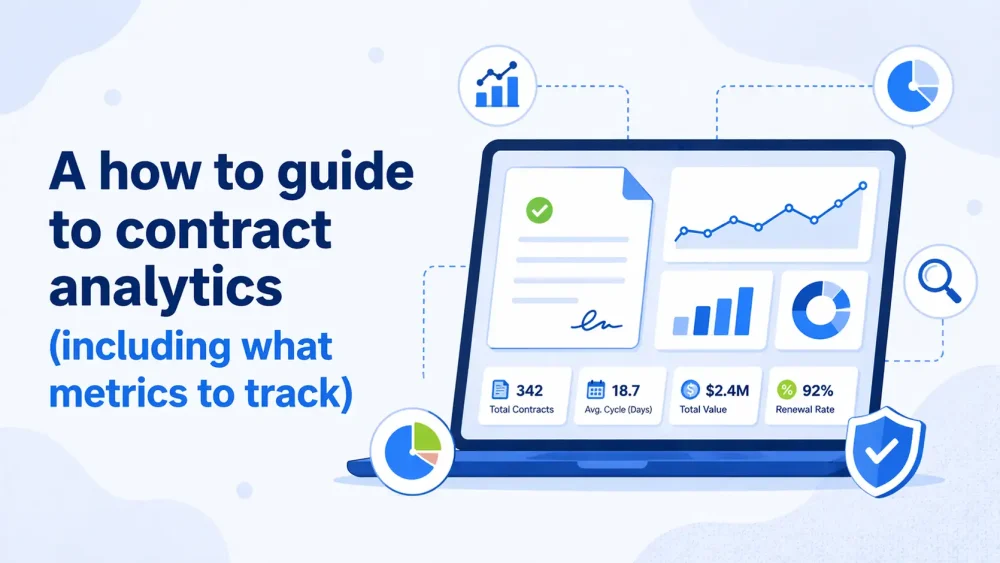
Contract analytics helps businesses turn complex contracts into actionable insights. By analyzing obligations, deadlines, risks, and financial data, companies can make smarter decisions, reduce errors, and optimize contract performance. Modern tools like SignTime streamline this process by providing AI-powered extraction, reminders, and dashboards that make tracking key metrics faster and easier.
See why businesses are rushing to SignTime’s feature-packed contract repository system.
What is contract analytics?
Contract analytics is the process of extracting meaningful data from contracts to gain insight into performance, obligations, and risk. It uses technology, often AI, to organize contract details, identify trends, and highlight important dates or clauses. With contract analytics, teams can quickly see where attention is needed, monitor compliance, and make decisions based on data rather than guesswork.
Why do companies perform contract analytics?
Companies perform contract analytics to turn their agreements into actionable insights that improve business outcomes. Analyzing contracts helps identify risks, monitor compliance, and ensure obligations are met. It also allows teams to optimize renewals, prioritize high-value contracts, and make data-driven decisions across legal, finance, and operations. Using analytics reduces manual work, prevents missed deadlines, and provides a clear view of the contract portfolio for better strategic planning.
10 contract metrics you should track
Tracking the right contract metrics gives teams a clear view of performance, risk, and opportunities in their contract portfolio. Metrics help businesses measure efficiency, identify potential issues, and make informed decisions. The following ten metrics are essential for monitoring and improving contract management.
- Contract cycle time
- Contract value
- Renewal and expiration rates
- Clause compliance
- Obligations tracking
- Risk exposure
- Counterparty performance
- Contract type distribution
- Approval times
- AI-identified anomalies
Each of these metrics will be explored in detail to explain what they measure, why they matter, how to calculate them, and tips to improve performance.
Contract cycle time
Contract cycle time measures how long it takes for a contract to move from creation to execution. It is calculated by subtracting the contract start date from the date it is fully signed and executed. This metric is important because long cycle times can delay revenue, slow projects, and increase administrative costs.
To find the data, track contract creation and signature dates in your contract management system. Improving cycle time can involve streamlining internal approvals, setting automated reminders for reviewers, and using AI to highlight bottlenecks. Monitoring this metric regularly helps teams speed up contract processes and maintain efficiency across departments.
Contract value
Contract value shows the financial significance of a contract. It is calculated by summing all payments, fees, or obligations outlined in the agreement. This metric helps companies prioritize high-value contracts and focus resources where they will have the most impact.
To track contract value, extract payment amounts and terms from your contract repository or dashboards. Teams can improve the impact of this metric by reviewing and updating contracts regularly and focusing on high-value deals for renewals or renegotiation.
Renewal and expiration rates
Renewal and expiration rates monitor how many contracts are renewed and how many are close to expiring. Tracking this metric ensures contracts remain active and enforceable. Missed renewals can result in lost revenue, disrupted services, or compliance issues.
Data for this metric comes from contract start and end dates, which can be tracked in a centralized system. Teams can improve renewal rates by setting automated reminders, reviewing contracts ahead of expiration, and engaging counterparties early.
Clause compliance
Clause compliance measures adherence to key contract terms, such as obligations, penalties, or confidentiality requirements. Ensuring compliance reduces legal risk and enforces consistent standards across contracts.
To calculate compliance, identify critical clauses and verify whether obligations are being met. Improving compliance can involve automated tracking, regular audits, and using AI to flag clauses that are not properly followed.
Obligations tracking
Obligations tracking monitors whether all parties meet their contractual responsibilities. It ensures deadlines, deliverables, and milestones are fulfilled on time. Missed obligations can result in penalties, disputes, or operational delays.
Teams can extract obligations from contracts using AI or review tools and track them with reminders or dashboards. Performance can be improved by assigning responsibility clearly, setting alerts for upcoming tasks, and reviewing obligations regularly.
Risk exposure
Risk exposure identifies potential issues or liabilities within contracts. It helps teams understand which contracts or clauses carry higher risk and require additional attention. Managing risk reduces legal exposure and protects the organization from costly errors.
Data for this metric comes from analyzing clauses, counterparty history, and financial terms. Teams can improve risk management by flagging high-risk contracts, performing regular reviews, and leveraging AI to detect unusual terms or trends.
Counterparty performance
Counterparty performance measures how well the other party meets contractual obligations. Strong performance indicates reliable partners, while poor performance may require renegotiation or intervention.
To track this metric, analyze completion of obligations, delivery times, and adherence to terms. Teams can improve counterparty performance by providing feedback, monitoring trends over time, and integrating performance data into contract reviews.
Contract type distribution
Contract type distribution shows the mix of contracts across different categories, such as sales, procurement, or NDAs. Understanding distribution helps allocate resources, balance workloads, and identify gaps in contract coverage.
Data comes from classifying all contracts in your repository by type. Teams can use this metric to prioritize review efforts, optimize workflows for common contract types, and identify opportunities to standardize processes.
Approval times
Approval times measure how long internal reviewers take to approve contracts. Tracking this metric helps identify bottlenecks and improve workflow efficiency. Slow approvals can delay execution, revenue, or compliance.
Approval data is captured by tracking timestamps for each step in the review process. Teams can reduce approval times by automating reminders, defining clear approval hierarchies, and using dashboards to monitor progress.
AI-identified anomalies
AI-identified anomalies highlight unusual terms, unexpected auto-renewals, or inconsistencies in contracts. Detecting anomalies helps prevent risk, errors, or non-compliance before they escalate.
Teams can find anomalies using AI-powered dashboards that scan contracts for deviations from standard terms. Performance can be improved by regularly reviewing flagged items, updating templates, and training the system to recognize new patterns.
SignTime provides the data you need to perform contract analytics
SignTime centralizes all contracts in one secure repository, making it easier to track metrics like cycle time, renewals, and obligations. Its AI-powered tools extract key data, detect anomalies, and send reminders for deadlines or auto-renewals. Teams can monitor performance, manage risk, and gain insights without manually reviewing every contract. With multiple e-signature options, including in-person signing, and integrations with tools like Salesforce, SignTime makes contract analytics faster, simpler, and more effective.
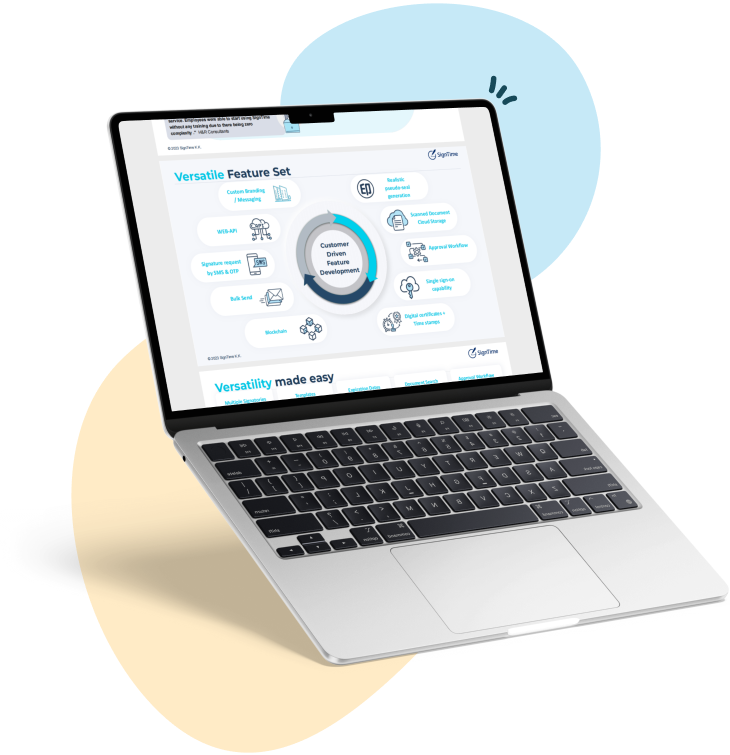
Download our brochure to see whether SignTime might be a fit for your organization.