release:
End-to-end contract management (done easy)

See why businesses are rushing to SignTime’s feature-packed contract repository system.
End-to-end contract management is the practice of managing contracts across their entire lifecycle, from request and creation through signing, storage, and renewal. It brings structure to a process that is often scattered across email, shared drives, and disconnected tools. When done well, end-to-end contract management helps organizations reduce risk, move faster, and maintain clear visibility into their contractual obligations.
What is contract management?
Contract management is the ongoing process of creating, storing, and managing agreements so they are easy to find and follow. It covers everything that happens before, during, and after a contract is signed.
Contract management helps teams keep track of obligations, deadlines, and terms that affect revenue, compliance, and operational performance. It also reduces risk by keeping a clear record of what was agreed to and when.
Contract management is not the same as legal advice or notary services. It is a business function that supports teams in staying organized and compliant.
The purpose of contract management in modern organizations
Contracts define expectations and responsibilities for both parties. They also create a record that teams can reference when disputes or confusion arise.
Contract management helps companies reduce surprises by tracking key dates and obligations. It also helps teams maintain consistent standards across departments.
Common challenges with manual or fragmented contract management
Many organizations rely on email, shared drives, or spreadsheets to manage contracts. That creates confusion, slow approvals, and missed deadlines.
When contracts live in multiple places, it becomes difficult to see the full picture of obligations and renewal dates. This increases risk and makes it harder to control costs.
What is meant by end-to-end contract management?
End-to-end contract management means managing contracts through every stage of their lifecycle, not just one or two steps. It connects people, processes, and systems so contracts move smoothly from request to execution and beyond.
An end-to-end approach is more than a document repository. It ensures that each step is tracked, responsibilities are clear, and deadlines do not get lost. It also creates visibility so teams can measure performance and reduce risk.
How end-to-end contract management differs from basic contract storage
A basic storage system only holds contract files. It does not track status, deadlines, or obligations.
End-to-end contract management tracks the progress of a contract, who is responsible, and what actions are required next. It keeps the contract alive throughout its lifecycle rather than treating it as a completed file.
Why organizations move toward end-to-end contract management platforms
Organizations move toward end-to-end platforms to reduce cycle time and improve consistency. They also use them to increase visibility across departments and reduce manual work.
End-to-end platforms can reduce risk by tracking obligations and renewal dates. They also help teams avoid missed approvals and slow execution.
What are the stages of the contract management lifecycle?
The contract lifecycle includes several stages, and each stage must be managed to avoid delays and risk. End-to-end contract management tracks contracts through every stage so nothing falls through the cracks.
The lifecycle is not always linear. Contracts often move back and forth between drafting, negotiation, and approval. The goal is to keep the process structured, visible, and efficient.
Here are the eight main steps in the contract lifecycle:
- Contract request and intake
- Contract creation and drafting
- Review and negotiation
- Approval and internal workflows
- Signature and execution
- Contract storage and organization
- Contract monitoring and obligation tracking
- Renewal, amendment, or termination
Contract request and intake
Contract request and intake is the starting point for the contract lifecycle. It defines what the contract is for, who needs it, and what the desired outcomes are.
A structured intake process reduces back-and-forth and keeps the request aligned with internal policies. It also helps teams prioritize contracts and allocate resources properly.
Contract creation and drafting
Contract creation and drafting is where the agreement is written or assembled from templates. This stage sets the tone for consistency and clarity.
Standard templates and clause libraries reduce the time it takes to draft contracts. They also reduce risk by ensuring consistent language and approved terms.
Review and negotiation
Review and negotiation is often the longest part of the lifecycle. It is where the contract terms are discussed, changed, and agreed upon.
Clear version control and collaboration tools reduce confusion and prevent duplicate edits. This helps teams complete negotiations faster and with fewer errors.
Approval and internal workflows
Approval and internal workflows ensure contracts meet internal rules and budgets. They also confirm that the right people sign off before execution.
Workflows create a clear path for approvals and make it easy to see who is responsible at each step. This reduces delays and keeps the process moving.
Signature and execution
Signature and execution is when the contract becomes legally binding. It requires secure signing and a clear audit trail.
Electronic signatures make execution faster and more trackable. In-person signing can also be important for industries that require physical verification.
Contract storage and organization
Contract storage and organization keeps agreements in a central location where they can be searched and accessed by the right teams. It is a key part of end-to-end management.
A centralized repository reduces the risk of lost contracts and ensures teams can find the documents they need. It also supports compliance and audit readiness.
Contract monitoring and obligation tracking
Contract monitoring and obligation tracking keeps teams aware of deadlines, deliverables, and compliance requirements. It prevents missed obligations and penalties.
Tracking key dates and obligations also helps teams measure performance and take action before problems arise. It makes contracts a living part of business operations.
Renewal, amendment, or termination
Renewal, amendment, or termination is the final stage of the lifecycle. It determines what happens when a contract ends or changes.
A proactive approach to renewals prevents automatic renewals from slipping by unnoticed. It also ensures teams have time to renegotiate terms or plan for a transition.
Why technology is essential for end-to-end contract management
Technology is essential because contracts are rarely simple. They involve multiple teams, approvals, and deadlines, and manual methods do not scale. Technology helps keep the process organized, visible, and faster.
Without technology, contract management becomes reactive. Teams only notice issues when deadlines are missed or disputes arise. With technology, teams can stay ahead of obligations and track progress in real time.
The role of automation in contract lifecycle management
Automation handles repetitive tasks that otherwise slow down contract workflows. It reduces manual work and keeps contracts moving without constant human intervention.
Automation can route contracts to the right people, send reminders, and update status automatically. This keeps the process consistent and reduces the chance of human error.
The impact of AI on contract visibility and risk management
AI can identify key contract data such as parties, dates, amounts, and obligations. It can also detect auto-renewal clauses and alert teams before deadlines.
AI improves visibility by extracting contract details into searchable fields. This helps teams find the information they need without reading through entire documents.
Integrations and their role in end-to-end contract management
Integrations connect contract systems to CRM, finance, procurement, and other business tools.
This keeps data consistent and prevents duplicate work.
When contract systems integrate with other platforms, teams do not need to manually update information in multiple places. This reduces errors and improves efficiency.
SignTime makes end-to-end contract management easy and affordable
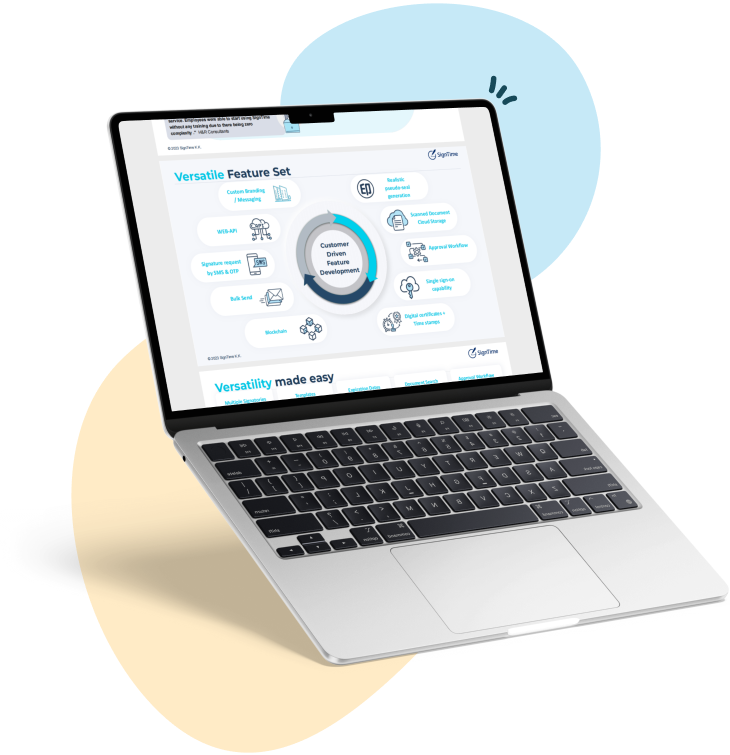
SignTime combines e-signature and contract management into one platform that supports the full lifecycle of a contract. It allows teams to manage contracts from request to renewal without relying on scattered tools.
SignTime supports multiple signature methods, including hand-drawn, typed, and hanko-style signatures. It also allows in-person signing, which can be important for industries that require physical verification.
SignTime’s AI capabilities help teams extract key contract details, set reminders, and identify auto-renewals. This helps teams stay on top of obligations and deadlines without manual tracking.
SignTime also integrates with major business systems such as Salesforce, making it easier to keep contract data aligned with CRM and sales workflows. This helps teams move faster and reduce administrative work.
Download our brochure to see whether SignTime might be a fit for your organization.