release:
What is a Contract Lifecycle Management System, and Should We Use One?

What is a contract lifecycle management system, and why are so many growing companies investing in one? A contract lifecycle management system is software that manages contracts from drafting and approval through signature, storage, renewal, and analysis. As contract volume increases and compliance demands grow, businesses rely on these systems to bring structure, visibility, and control to every stage of the agreement process.
Simply put, yes, most businesses need a contract lifecycle management system. Here’s why.
See why businesses are rushing to SignTime’s feature-packed contract repository system.
What is a contract lifecycle management system?
A contract lifecycle management system is a structured software platform that manages the full life of a contract from initial request through renewal or termination. It centralizes drafting, review, approval, execution, storage, and reporting within a single environment. Instead of treating contracts as static files, the system treats them as active business assets with data, deadlines, and obligations that require ongoing oversight.
Unlike simple document storage tools, a contract lifecycle management system governs process as well as content. It standardizes workflows, enforces approval hierarchies, and maintains a searchable repository with detailed metadata. Many organizations also refer to it as a CLM platform, contract management system, or contract lifecycle software, but the core purpose remains consistent.
At its core, the system creates predictability. It reduces manual coordination, clarifies accountability, and ensures that every agreement moves through a defined and traceable lifecycle.
What problems does a contract lifecycle management system solve?
Businesses often struggle with contracts scattered across email inboxes, shared drives, and spreadsheets. This disorganization creates delays, missed deadlines, and inconsistent compliance. A contract lifecycle management system addresses these challenges by centralizing documents, standardizing processes, and automating key actions.
Manual approval processes often slow down business operations. Without clear routing rules, contracts can get stuck in review or sent to the wrong stakeholders. Missed renewal dates or overlooked obligations can lead to financial loss or legal exposure. Lack of standardized templates and clause libraries increases negotiation risk and makes contracts inconsistent. Poor version control can create conflicting obligations, while limited reporting makes it difficult to track performance, forecast obligations, or meet compliance requirements. Disconnected systems force duplicate data entry and reduce operational efficiency.
By resolving these issues, a contract lifecycle management system helps companies gain clarity, speed, and reliability across every contract.
How does a contract lifecycle management system work?
A contract lifecycle management system organizes every stage of a contract so teams can work efficiently and reliably. Instead of relying on fragmented tools or manual tracking, the system manages the contract as an active workflow with defined steps, responsibilities, and deadlines. Most modern systems cover four key phases: creation, review and approval, execution, and post-signature management.
Contract creation and drafting
The system provides templates and clause libraries to ensure contracts are consistent and accurate. Users can quickly generate agreements using pre-approved language, reducing errors and accelerating drafting. Some systems also include AI suggestions for key terms, making it easier to create compliant contracts.
Review and approval workflows
Contracts are automatically routed to the right stakeholders based on preconfigured rules. Escalation paths ensure urgent contracts move forward without delay. The system tracks each review and approval, creating a clear record for accountability and compliance.
Execution and e-signature
Once approved, contracts are signed electronically. Modern systems support typed, hand-drawn, and in-person signature methods to accommodate different needs. Each e-signature event is logged, creating a secure audit trail that meets internal and regulatory standards.
Post-signature management and renewal
After execution, contracts remain active in the system with obligations and deadlines tracked automatically. Notifications alert teams to upcoming renewals, expirations, or critical milestones. The platform also allows reporting and analytics to assess contract performance and identify trends.
What features define a modern contract lifecycle management system?
Modern contract lifecycle management systems combine automation, analytics, and integration to manage contracts efficiently and reduce risk. They are designed to support every stage of the contract lifecycle while providing visibility and control for teams across the organization.
- Centralized contract repository: All contracts are stored securely in a searchable database, making it easy to locate agreements and review their status.
- Automated approval workflows: Predefined rules route contracts to the right stakeholders, reducing delays and manual coordination.
- Multi-format e-signatures: The system supports typed, hand-drawn, and in-person signatures to meet different business and legal requirements.
- AI powered data extraction: Key fields such as counterparties, amounts, start and end dates, and renewal terms are identified automatically.
- Version control: Each change is tracked to prevent conflicts and maintain a complete record of revisions.
- Collaboration tools: Teams can comment, edit, and share contracts securely in real time.
- Renewal and deadline alerts: Automated notifications ensure important dates are not missed.
- Reporting and analytics: Dashboards provide insight into contract cycle times, obligations, and performance metrics.
- Role-based permissions: Access to contracts is controlled to protect sensitive data.
- Integration with CRM and enterprise tools: These systems connect with systems like Salesforce to synchronize contract and business data.
- Template and clause library management: Standardized language ensures compliance and consistency across contracts.
- Audit trails: Every action, from edits to signatures, is logged for accountability and compliance purposes.
- Configurable approval hierarchies: Aligns contract approvals with organizational policies and governance structures.
Which departments benefit most from a contract lifecycle management system?
A contract lifecycle management system supports multiple teams by streamlining workflows and improving visibility into contractual obligations. Each department gains efficiency and reduces risk in ways that align with its specific responsibilities.
- Sales teams benefit from faster deal cycles because templates, automated approvals, and e-signature options help close contracts more quickly.
- Procurement teams gain control over vendor agreements and can track renewals, pricing, and service level obligations in a centralized repository.
- Legal teams improve consistency across contracts, reduce deviations from approved language, and maintain comprehensive audit trails.
- Finance teams monitor payment schedules, revenue commitments, and financial obligations with clearer reporting and alerts.
- Human resources teams manage employment contracts, policy acknowledgments, and contractor documents efficiently with automated workflows.
- Operations teams track service level agreements, compliance deadlines, and contract obligations, ensuring operational continuity and accountability.
When should a company invest in a contract lifecycle management system?
Organizations should consider a contract lifecycle management system when manual contract processes begin to slow business operations or create risk. Indicators include growing contract volume, increasing complexity, and reliance on spreadsheets or email for approvals.
Companies facing stricter regulatory requirements or industry compliance standards may also need a CLM system to maintain accurate audit trails and consistent workflows. Businesses that experience missed renewal dates, inconsistent approvals, or frequent disputes over obligations can benefit immediately from automation.
Scaling across regions or multiple departments is another signal. As teams expand, decentralized contract management becomes inefficient, and visibility into obligations diminishes. A CLM system ensures that contracts remain centralized, auditable, and actionable, supporting growth without adding administrative burden.
A practical approach to choosing a contract lifecycle management system
Selecting the right contract lifecycle management system requires balancing functionality, ease of use, and business needs. Companies should evaluate both current pain points and future growth to make a practical choice that aligns with their operations.
Start by identifying core contract challenges before comparing vendors. Focus on bottlenecks, approval delays, and compliance gaps to understand which features will provide the most value. Integration is another key factor. Systems that connect seamlessly with CRM, ERP, and document management tools reduce duplicate work and ensure data stays accurate across platforms.
AI capabilities can make a significant difference in day-to-day contract management. Automated data extraction, obligation tracking, and renewal alerts allow teams to act proactively rather than reactively. E-signature flexibility is also important. Support for typed, hand-drawn, and in-person signing options ensures the system works for all counterparties and industries.
Security and compliance should never be overlooked. A contract lifecycle management system must provide role-based access, audit trails, and meet internal and regulatory requirements. Cost evaluation should weigh both software pricing and implementation expenses against the efficiency gains and risk reduction the system offers. Scalability is equally important, ensuring the system can handle increased contract volume, new departments, and international operations without disruption.
By approaching the selection process this way, businesses can choose a contract lifecycle management system that fits their workflow, enhances efficiency, and supports compliance without adding unnecessary complexity.
SignTime is a scalable contract lifecycle management system
For companies evaluating what is a contract lifecycle management system, SignTime offers a practical and flexible solution. It combines e-signature capabilities with full contract lifecycle management, supporting drafting, approvals, execution, storage, and renewal in a single platform.
SignTime accommodates multiple signing preferences, including typed, hand-drawn, hanko, and in-person signatures. This flexibility ensures contracts can be completed smoothly with different counterparties and in industries where face-to-face execution remains important.
AI-powered features automatically extract key contract data, including counterparties, amounts, dates, and renewal terms. Automated reminders and alerts help teams act before deadlines pass, reducing missed obligations and supporting proactive contract management.
Integration with systems such as Salesforce ensures that contract data stays aligned with revenue and operational workflows. Teams gain visibility and control without creating additional administrative burden. While no system solves every possible workflow challenge, SignTime provides a balanced, scalable solution that supports growth, efficiency, and compliance in a wide range of organizations.
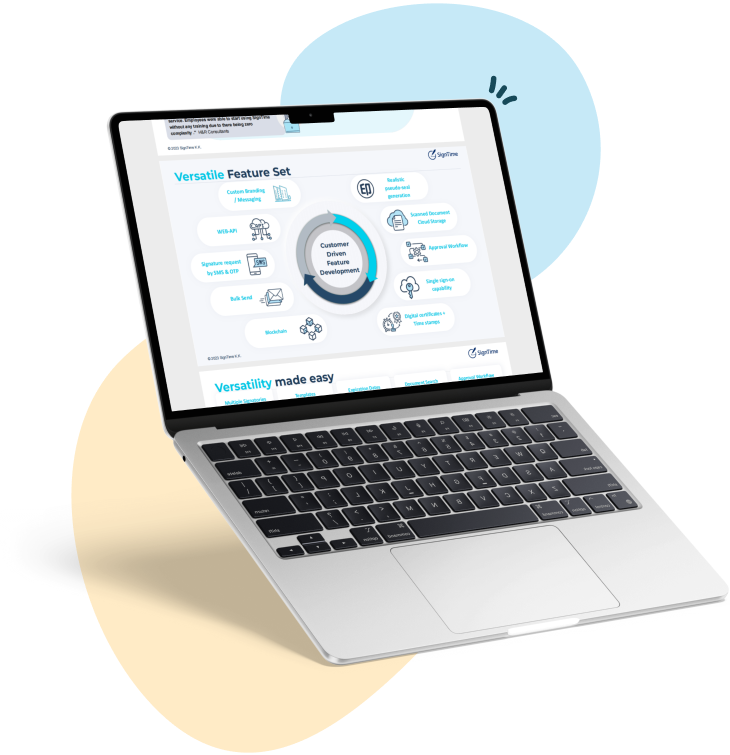
Download our brochure to see whether SignTime might be a fit for your organization.