Reduced Contract Turnaround Time by Approximately 90% Through Digitalization of Contract Operations in the Renewable Energy Sector
Greenvolt Solar Japan Co., Ltd.

Interviewee
Mr. Shibata, Development Division
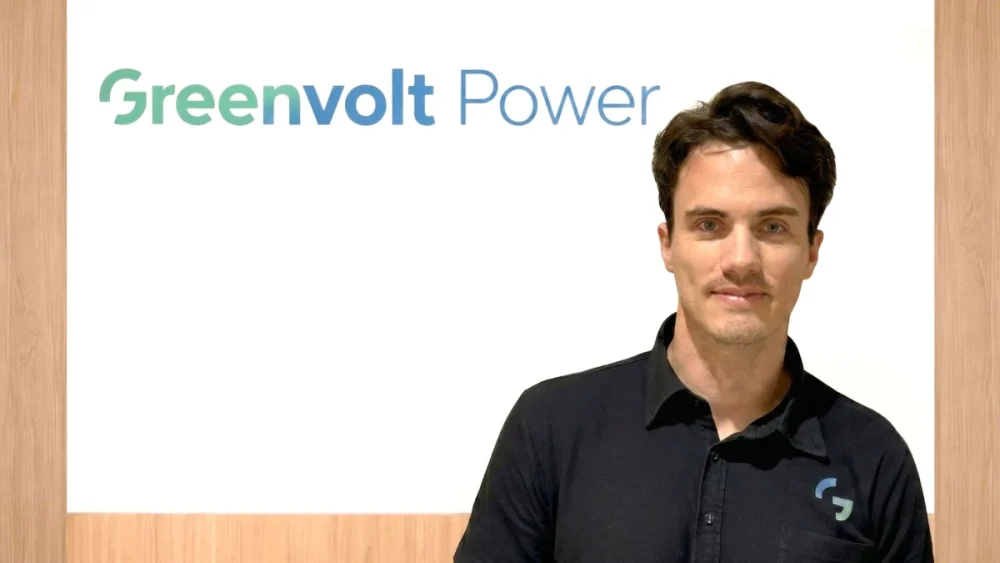
(Pictured: Matteo Centonze, Head of Business Development Asia)
Greenvolt Solar Japan Co., Ltd., a company engaged in renewable energy development, previously managed contracts such as NDAs, outsourcing agreements, and purchase orders entirely on paper. Documents were printed, stamped, bound, and exchanged by postal mail.
Because multiple contracts are required for each project, contract administration created a significant operational burden. These tasks had to be handled in parallel with other core responsibilities, increasing complexity and the risk of missed tasks.
In addition, contract execution often required two weeks to one month. Since NDAs were necessary before starting business discussions, these delays created concerns over lost business opportunities.
The company also faced high costs associated with revenue stamps, which could amount to tens of thousands of yen per agreement depending on contract value.
To improve efficiency and speed, Greenvolt Solar Japan introduced the electronic contract platform SignTime.
After implementation, mailing and stamping were no longer necessary, and the contract turnaround period was shortened from approximately one month to as little as two to three days. In addition, the company reduced stamp duty and mailing costs while improving document management and searchability.
In this case study, we spoke with the company about why it reviewed its contract processes and how electronic contracting improved operations.
- Industry
- Energy
- Number of Employees
- Medium
- Pain Points
- Cost Consumption、Want to get rid of paper documents
・Paper-based contract creation, stamping, and mailing caused delays in NDA execution before negotiations, creating the possibility of lost business opportunities.
・Employees had to manage approvals, printing, binding, shipping, progress tracking, and storage while handling other work responsibilities, increasing workload and risk of missed tasks.
・Revenue stamp costs were incurred depending on contract value, with some contracts costing between ¥60,000 and ¥100,000 each.
・After introducing electronic contracts, turnaround time was reduced from two weeks to one month down to as little as two to three days, and generally no longer than one week.
・Mailing, stamping, and manual follow-up were eliminated, reducing processing time per contract from around 15 minutes to approximately 5 to 10 minutes.
・Revenue stamp costs were eliminated and postage expenses reduced, significantly lowering contract-related costs.
How were contracts created and exchanged before implementing SignTime?
Previously, contracts such as NDAs, outsourcing agreements, and purchase orders were prepared on paper, stamped, bound, and sent by post. For domestic counterparties in Japan, the company typically used Letter Pack or similar delivery services and waited for signed copies to be returned.
In some cases involving overseas headquarters, PDF files were exchanged by email, but final execution was still generally completed using paper documents.
What aspects of paper-based contract management were particularly burdensome?
The person in charge had to manage the entire process from contract preparation to stamping, binding, shipping arrangements, progress confirmation, and storage. This had to be done alongside regular duties, which created a heavy workload.
Stamp approval requests and mailing procedures occurred two to three times per week, often during busy work hours, increasing the risk of missed tasks.
In addition, it was difficult to see the status of each contract, so constant follow-up and manual checking were required.
How long did it typically take to complete a contract?
Depending on the agreement type, it generally took between two weeks and one month to complete execution.
Because contracts were exchanged by mail, delays were unavoidable, and tracking shipments through postal services added further lead time.
What prompted you to introduce electronic contracts?
The biggest reason was the time required to complete agreements.
NDAs in particular were always required before starting business discussions. If execution took up to one month, there was a real possibility of losing valuable opportunities.
The company therefore began evaluating electronic contracts in order to improve speed and make negotiations proceed more smoothly.
Why did you choose SignTime over other services?
When considering electronic signature solutions, Greenvolt Solar Japan compared several major providers.
The deciding factor was SignTime’s support for a Japan Ministry-certified timestamp.
From the perspective of long-term contract retention and legal evidentiary reliability, the company considered a trusted timestamp highly important. The fact that the service supports a timestamp aligned with Japanese regulations was a major advantage.
The company also valued the platform’s support for both Japanese and English, as well as its suitability for contracts with overseas offices and international business partners.
Was the implementation process smooth?
During implementation, internal support staff provided demonstrations and manuals, making it easy to understand the basic functions.
Some employees who were less familiar with digital tools were initially hesitant, but once they began using the platform, adoption progressed naturally.
For counterparties, the company confirms in advance whether electronic contracts are acceptable. If not, paper contracts are still used when necessary.
What is the workflow after introducing SignTime?
Currently, after internal approval is completed through the company’s internal approval system, contracts are sent and executed through SignTime.
When sending electronic contracts, the legal department is always included in CC as part of the operational process.
What benefits have you seen after implementing SignTime?
The major benefits gained through implementation are as follows.
Shorter Contract Turnaround Time
Previously, contracts often required two weeks to one month to complete. After introducing electronic contracting, execution can now be completed in as little as two to three days, and generally within one week.
In particular, faster NDA execution has made it easier to begin business discussions smoothly and has reduced the risk of missed opportunities.
Reduced Administrative Workload and Improved Efficiency
Tasks such as printing, stamping, binding, and mailing paper documents are no longer necessary.
Processing time per contract has been reduced to approximately five to ten minutes, and the burden of contract management overall has decreased significantly.
Cost Reduction and Better Contract Management
Electronic contracting eliminated revenue stamp costs, which in some cases had reached nearly ¥100,000 per contract.
In addition, contract search and document management have become much easier, allowing quick access to past agreements when needed.
How have counterparties responded?
Companies already familiar with electronic contracts have generally accepted the process smoothly.
On the other hand, some multinational corporations prefer paper contracts due to internal security policies, so the company currently uses both methods depending on the situation.
Are there any future plans for further digitalization?
Going forward, Greenvolt Solar Japan plans to utilize SignTime’s Signature Delegation feature and further expand its operational use.
As the company continues promoting internal digital transformation, it is also considering applying digitalization beyond contract management into other business areas.
| Company Name | Greenvolt Solar Japan Co., Ltd. |
|---|---|
| Industry | Energy |
| Company Profile | Greenvolt Solar Japan Co., Ltd. is the Japanese subsidiary of the Greenvolt Group, a global renewable energy company operating across solar, wind, and biomass sectors. In Japan, the company is engaged in the development, investment, and project management of renewable energy power plants. Its business covers all phases of renewable energy projects, including development, construction, financing, and asset management. Working closely with its global headquarters and overseas offices, Greenvolt Solar Japan plays an important role in advancing renewable energy initiatives within the Japanese market. The Greenvolt Group operates internationally across Europe, North America, and Asia, developing and managing renewable energy assets worldwide. In Japan, the company focuses on domestic power plant development, investment opportunities, and project execution while leveraging global expertise. |
| Number of Employees | Medium |
| URL | https://power.greenvolt.com/ |